Why we build hives like small houses
A beehive does not have to look like a toolbox. Ours are timber structures you want to look at — and that bees want to live in.
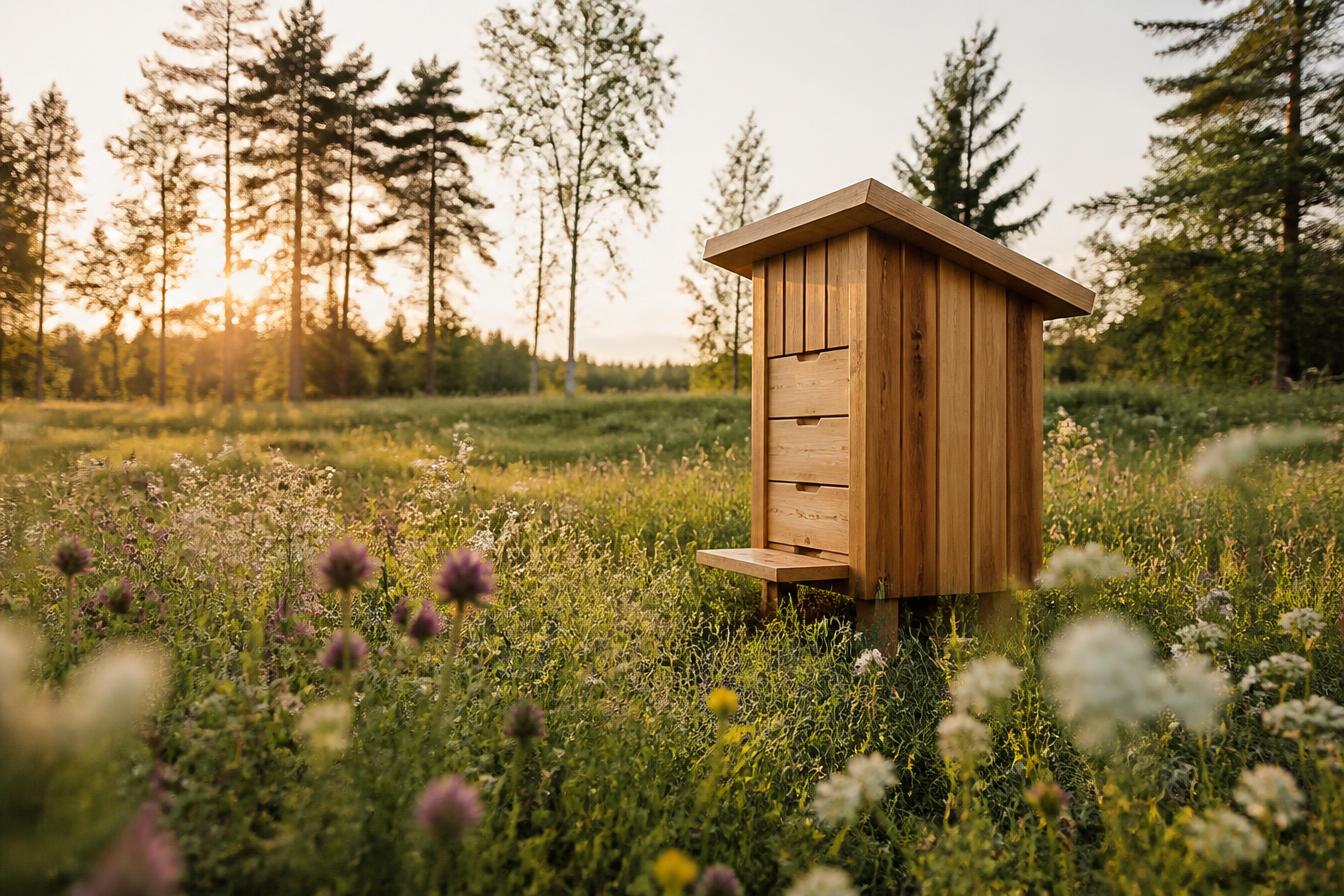
Architecture, not utility
Most beehives are designed to disappear behind a hedge. We think that is a missed chance. A hive is the smallest building most people will ever own, and it sits in a garden people look at every day. It should feel like it belongs there.
That is why every KÜTKE hive is drawn more like a small cabin than a box. Clean rooflines, honest joinery, real timber. No yellow-and-black stripes, no plastic vents, no pretending it is something it is not.
Bee space comes first
The outside is architecture, but the inside is biology. All our hives share the same chamber: 465 mm wide, 380 mm deep, with a 17 mm frame rebate and an 8 mm bee space above and below the frames. Those numbers are not decorative — they are what keeps a colony calm when you open the roof.
Built to last a generation
Baltic pine and larch, raw linseed oil outside, nothing at all inside. The bees finish the interior themselves with propolis. After ten years the timber has silvered, the colony is strong, and the hive still looks like it was meant to be there.